
Since the end of last month, several major NAND manufacturers have publicly stated that customer demand now exceeds their supply capacity, with some having already secured their production capacity for next year and are even assessing demand projections for 2027. Recently, news of spot price increases of up to 50% for some suppliers' NAND spread quickly through the market. Moreover, memory module makers like Adata and Phison have described the current market situation as "rare." The sense of resource scarcity in the spot market continues to intensify.
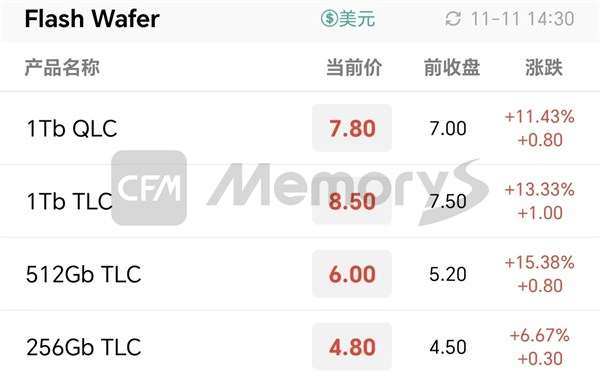
Looking at Flash wafer prices, after nearly two and a half months of sustained increases, the cumulative price rise for NAND Flash generally falls within the 50%-100% range. Notably, the price for 512Gb TLC NAND Wafer has nearly doubled. It is important to note that from a longer-term perspective, the price for 1Tb QLC/TLC NAND Wafer has reached a record high, while prices for other densities are also approaching their previous peaks.
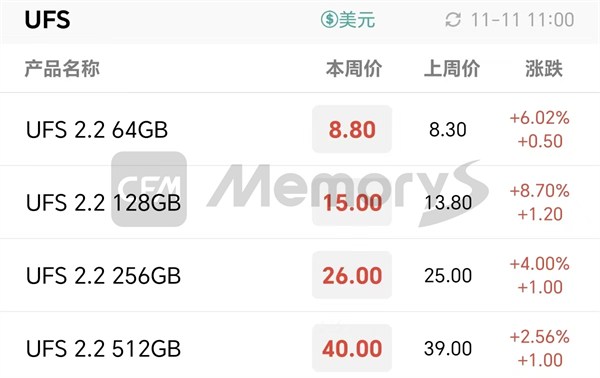
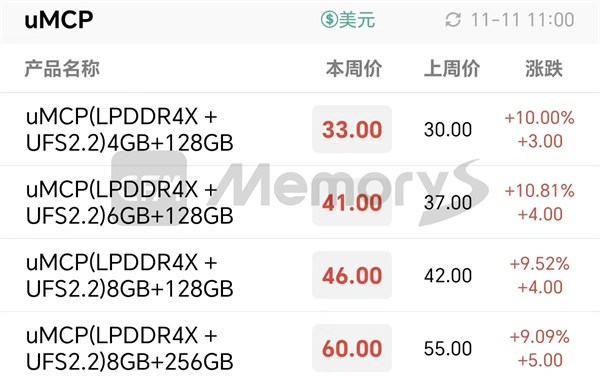
Driven by the sharp increase in NAND costs, prices for embedded eMMC/UFS have also been raised significantly. Currently, major suppliers continue to maintain tight shipment strategies, and a significant improvement in resource supply is unlikely in the short term. Embedded memory prices are therefore expected to maintain their upward trend. In the mainstream market, end-products that cannot bear such high cost pressures may face being phased out.
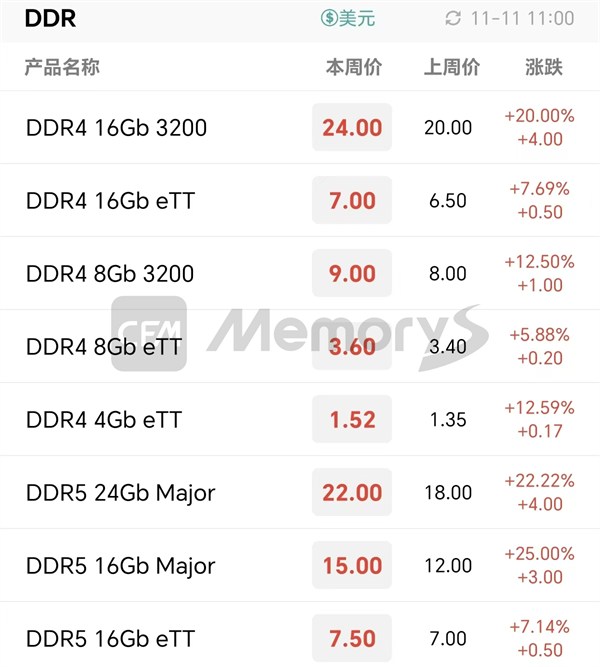
Upstream memory components, including TLC NAND, QLC NAND, DDR4, and DDR5, all registered price increases across various categories.
Latest Quote For Flash Wafer/DDR
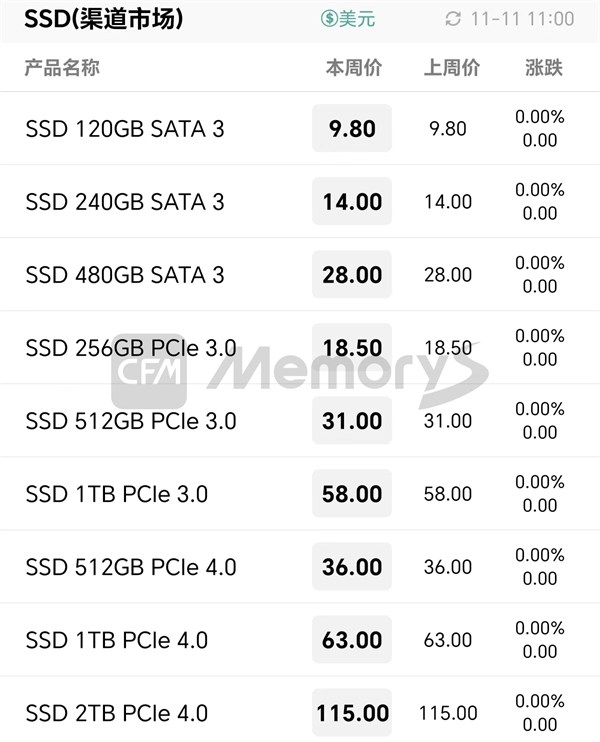
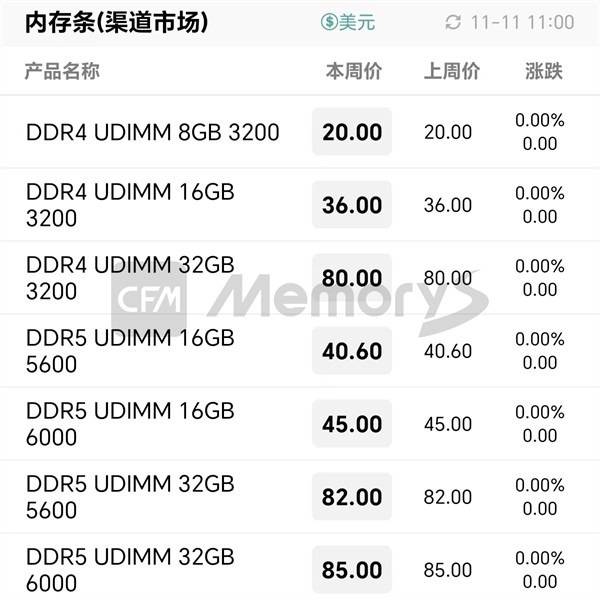
The current market trend in the channel market has significantly diverged from past patterns. Against the backdrop of ongoing supply-side production controls, prices of low-end resources in the trade sector have doubled. Overall, low-cost resources have essentially become "unobtainable." Meanwhile, channel manufacturers, operating within this rising price environment and harboring high expectations for future market conditions, are widely adopting a "wait-and-see" approach, holding back supplies in anticipation of better prices. Channel market SSD and DDR Module prices held steady this week on a weekly basis.
Latest Quote For Channel SSD/DDR Module
Since last month, OEM SSD prices have undergone multiple significant increases. Some PC clients, in an effort to replenish inventory, have gradually accepted the new pricing, leading to small-scale order transactions. However, NAND Flash supply from original manufacturers remains tight, and industrial channel suppliers show low willingness to accept new orders. Overall, OEM SSD prices are currently consolidating at high levels.
Latest Quote for OEM SSD/DDR Module
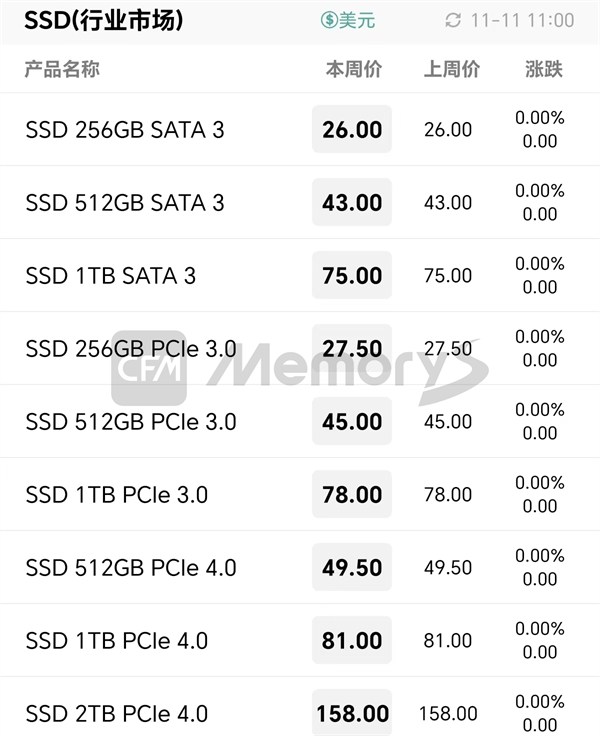
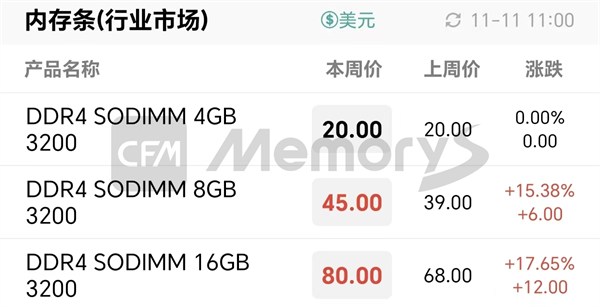
Regarding DRAM, DDR4 chip spot prices have surged dramatically, with some prices even inverting compared to equivalent-capacity DDR5. Clearly, consumer-grade clients find it difficult to accept such high-cost DDR4 products. Currently, the supply of consumer-grade DDR4 chips from original manufacturers to downstream memory module makers has been stagnant for an extended period. With spot prices being excessively high and normal inventory replenishment becoming unfeasible while existing stocks continue to be depleted, this market situation conversely provides strong support, keeping OEM DDR4 memory module prices firm and on an upward trend.
Globally, the accelerated construction and rollout of AI data centers, coupled with major cloud service providers continuing to advance AI infrastructure investments into next year, have created server memory demand that far exceeds original manufacturers' expectations and actual production capacity. Compounded by ongoing market panic buying and rising price sentiment, the fulfillment rate for server DRAM supply from original manufacturers is low, leading to a significant jump in DRAM prices in Q4.
Latest Quote For DDR Module (Server)
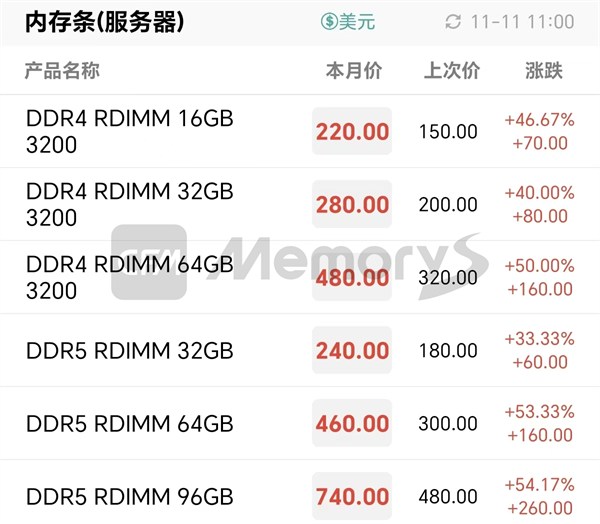
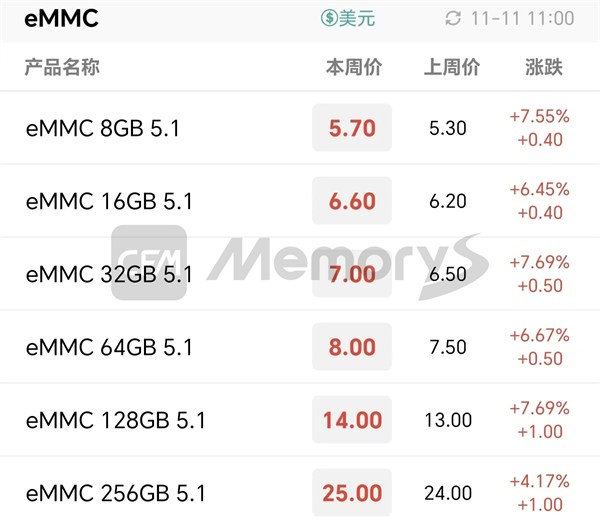
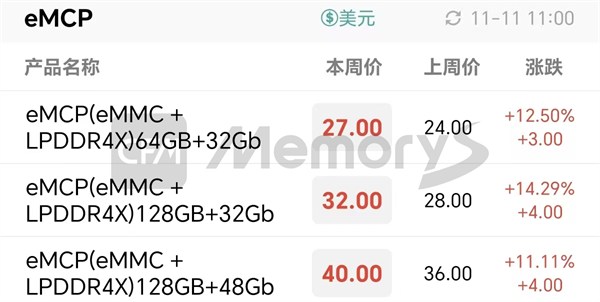
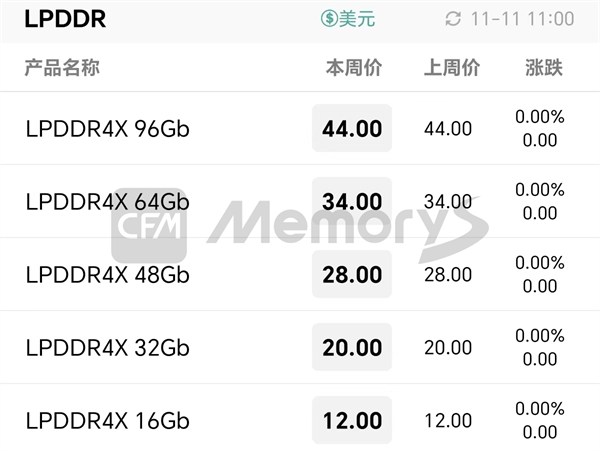
Since Q3, NAND Flash supply from original manufacturers to downstream memory makers has contracted sharply quarter-on-quarter. Currently, during this critical period for new quarter negotiations, original manufacturers remain undecided on capacity allocation and product pricing. While anxiously awaiting confirmed supply from original manufacturers, memory makers are also concerned about the sustainability of future supply, leading them to continue insisting on raising eMMC product prices. After over two months of price increases, the general price hike for eMMC and LPDDR4X products has exceeded 50%. Facing cost pressures, application ends like set-top boxes and entry-level smartphones have downgraded the specifications for some products. If storage costs remain persistently high, small-scale, mass-market consumer electronics terminals that exceed their cost-bearing limits may face market consolidation.
Latest Quote For Embedded memory Products
All Rights Reserved © 2026 MemoryMarket.com